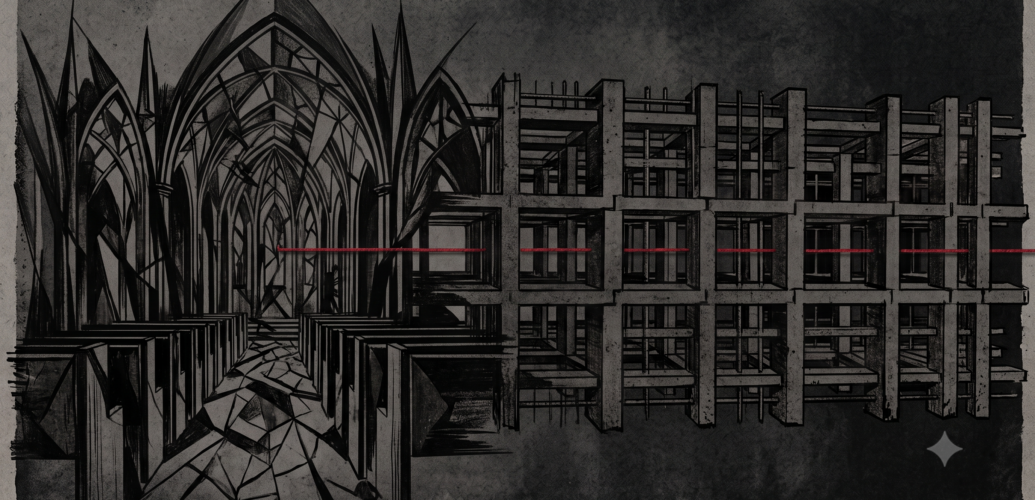
I’m genuinely surprised that several people who played key roles in the Sarnia Police Service’s recent failures are now aggressively asking for your vote to lead this city.
If we want to stop our tax dollars from being swallowed by top-heavy institutional vanity projects, we have to stop electing people who let bureaucracies do their thinking for them. This election season, when these candidates knock on your door, don’t ask them if they love Sarnia — ask them why they refused to look at the receipts. Blind trust is a luxury our neighbourhood budgets simply cannot afford.
We watched a suspended chief push an ego-driven, top-heavy $91M+ police facility proposal that would have cost Sarnia taxpayers over $231 million in lifetime interest. We saw manipulative, fear-mongering media releases. We saw a corporate social media platform transformed into a rogue hub for public shaming and toxic gossip. And we saw an unprecedented executive crisis where both the chief and deputy chief were suspended pending independent workplace harassment investigations.
Through all of it, a specific faction on the Police Services Board didn’t dig in their heels and demand answers. They followed the administrative lead with little visible scrutiny.
But this isn’t just a local political breakdown or a story about a few bad choices by career politicians. This is a story about a mindset. Adult institutional bootlicking is an automated survival mechanism—a learned reflex engineered in youth. There exists an invisible, highly efficient conveyor belt that seamlessly converts compliance in the church pew into uncritical submission to the carceral state.
I call it The Obedience Pipeline.
The Anatomy of the Obedience Pipeline
The foundations of this pipeline are laid early, shifting seamlessly from the pulpit to the police fortress. Having spent years navigating the evangelical academic and ministry worlds—from Tyndale University to planting theStory with the Free Methodist Church in Canada —I know this structural architecture intimately. I am not critiquing this framework as an outsider; I am pulling back the curtain on a blueprint I spent half my life escaping.
In high-commitment evangelical, Charismatic, and Pentecostal environments, children are socialized through specific theological control mechanisms designed to hollow out critical tracking:
- “Spiritual Covering”: The dogma that an individual’s psychological and spiritual safety depends on absolute, submissive alignment with a designated earthly authority figure.
- The Shepherding Model: The enforcement of strict vertical hierarchies where personal agency is systematically surrendered to “anointed” leaders.
- The Criminalization of Doubt: The explicit socialization that frames independent systemic critique, skepticism, or dissent not as a sign of intellectual health, but as a direct act of spiritual rebellion, demonic pride, or sin.
This conditioning isn’t just bad theology; it alters the brain’s cognitive architecture. According to the False Tagging Theory of neuro-cognitive function, when an individual’s developing environment consistently punishes critical questioning, the brain’s ventromedial prefrontal cortex (vmPFC)—the layer responsible for executing cognitive doubt and resisting elite persuasion—is physically impaired. You are quite literally rewired to accept top-down, mediated reality.
This neuro-cognitive scaffolding explains why white evangelicals consistently score the absolute highest on the Right-Wing Authoritarianism (RWA) scale. The RWA trait is defined by three interlocking pillars: authoritarian submission (uncritical deference to perceived legitimate power), authoritarian aggression (hostility toward out-groups), and rigid conventionalism.
To see this pipeline working in pure, real-time isolation right here in Sarnia, one only needs to look at digital amplifiers like Brandon McCaskill (Turning Point Sarnia).
McCaskill is a textbook local specimen of this conditioning. Operating under his commercial voice-over profile (Brandon McCaskill VO), he engages in a sophisticated form of acoustic masking. He records inside a room at his home turned studio, utilizing a vocal delivery marketed as conversational, believable, and friendly to package and normalize highly divisive, conspiratorial, and exclusionary far-right culture-war narratives.
Whether he is delivering a sermon-style address at a candlelight vigil for MAGA pundit Charlie Kirk—explicitly framing a hyper-partisan political brand as “rooted in the gospel”—or using his platforms to defend a politician’s vulgar budget-meeting outbursts, the mechanism is identical. He treats authority as an unquestionable, top-down monopoly on truth. When the system faces data-driven critiques regarding police budgets or institutional crises, his automatic reflex is to deploy thought-terminating clichés, pathologizing the critic as someone who is simply “hurt by the church” and acting out of personal bitterness.
Of course, the evangelical church and its leadership are not completely monolithic; there are spaces and individuals who actively resist these control structures. But the high-control models create a repeatable pipeline that naturally craves coercive, top-down power.
Institutional Osmosis and the Board Faction
When this psychological scaffolding leaves the church pew, it undergoes institutional osmosis. If you are rewired from youth to believe that truth is top-down and absolute, you do not lose the need for a proxy when you grow up—you simply swap out the “anointed” pastor for the “anointed” police chief.
This brings us directly to the recorded governance record of the political faction now asking to run Sarnia. They have operated not with independent vision, but as a protective buffer for a centralized bureaucracy:
- Councillor Chrissy McRoberts (Mayoral Candidate): Bringing her Canadian Armed Forces chain-of-command training directly onto the council floor, McRoberts’ default setting has been to treat administrative budget requests with the compliance of an operational order. She consistently backed the administrative vision on the massive building project, supported taxpayer-funded promotional videos to pitch it, and voted for communication protocols that centralized public messaging while limiting public transparency. For McRoberts, rigorous financial scrutiny appeared to feel like insubordination rather than her actual job as an independent civilian scrutineer.
- Councillor Anne Marie Gillis (Council Candidate): The classic career politician. Gillis has routinely utilized her public microphone to perform a superficial spectacle of “modernization” and “progress,” while systematically rubber-stamping and voting through whatever centralized agenda institutional staff placed directly in front of her.
- Paul Wiersma (Council Candidate): Wiersma’s record as former board chair contains the most glaring admissions of this institutional insulation. He openly acknowledged that the board’s public town halls on the $91M+ facility were a complete farce because the core capital decisions had already been rubber-stamped behind closed doors a full year prior. Even more damagingly, he publicly declared that city councillors sitting on the police board “don’t represent City Council” once they step inside the station, actively attempting to strip Sarnia taxpayers of direct democratic oversight over their largest municipal expense.
To understand that Sarnia is not an isolated anomaly, we have to look at how this exact pipeline has imploded on regional and global scales.
Look at the catastrophic collapse of The Meeting House and its former lead pastor, Bruxy Cavey, in Ontario. Thousands followed Cavey’s highly charismatic “celebrity teacher” model blindly, creating a massive insulation shield that left vulnerable people exposed to systemic abuse and caused the entire apparatus to fracture when allegations emerged. The church’s response was heavily criticized as slow and protective of the leader—a perfect parallel to how our local board shielded an executive police administration.
Go across the border into the Detroit and Great Lakes regional megachurch landscape, and you find identical trends. For decades, high-profile evangelical and Pentecostal churches systematically weaponized “submission theology” and the scriptural directive “touch not God’s anointed” to cover up severe abuses, silence victims who came forward years later, and prioritize the institutional brand over immediate human harm.
Globally, this is the exact same pipeline where massive Pentecostal and Charismatic movements in countries like Brazil and the Philippines explicitly back populist strongmen through spiritual warfare rhetoric. The theology inherently craves coercive, top-down state violence to enforce cosmic order.
The Cage of Access and the Free Speech Illusion
For over a year now, I have been trying to get Brandon McCaskill to do a recorded conversation with me. I have reached out repeatedly, suggesting an open, unmediated dialogue where we could drop the digital personas and actually engage each other’s ideas face-to-face.
His response has been an absolute refusal. He flatly rejects the invite, locks the door to his personal recording room, and loudly champions the idea to his followers that I am “bad for Sarnia” and that he has zero interest in promoting or exposing his audience to my voice. All the while, he uses his platform to mock me relentlessly from a safe distance.
Brandon markets himself as a radical champion of a “free speech platform.” The irony is total. In his digital groups, his “free speech” comes with an airtight set of survival rules for the echo chamber—like a strict mandate stating you are forbidden from blocking a moderator. He loves to reserve his microphone exclusively for those who share his identical ideological script, while aggressively purging or shutting out the voices that offer actual contradiction.
This isn’t strength; it is a defensive reflex born of deep ideological captivity. Brandon’s absolute, uncritical defense of suspended Chief Derek Davis isn’t a position born of rigorous truth-seeking. It is a textbook case of Access Capture.
When Chief Davis arrived, he personally validated Brandon, granting him exclusive building walkthroughs and backstage interviews that ordinary Sarnia residents could never dream of accessing. For a developing digital commentator, this proximity to power was intoxicating. The institution thoroughly bought his compliance without spending a single dollar; they simply gave him “insider status.”
Once you accept that bait, you enter a psychological trap. Brandon cannot look at the empirical reality of the 2026 police crisis—the workplace harassment investigations and the suspensions—because doing so would smash his entire self-concept. It would force him to admit that his special, privileged access didn’t make him enlightened; it just made him exceptionally easy for a powerful bureaucrat to manage and deploy as a media intermediary.
To protect his identity, Brandon is forced to engage in a massive double standard around human behavior. When Police Services Board Chair Kelly Ash visibly cried after sitting through hours of disturbing workplace harassment testimony, Brandon publicly attacked her, calling her tears “unprofessional” and stating they ruined her credibility. In Brandon’s world, calm, authoritative, patriarchal command is automatically trusted, while the visible distress of human beings suffering under a toxic system is dismissed as manipulation.
This is the exact layout of what authors Alba Onofrio, Nadia Arellano, Judith Bautista Fajardo, and Arelis Benítez define as Spiritual Violence. They detail the mechanics of “Spiritual Terrorism”—the tactical use of theological shame, fear, and institutional isolation to enforce public submission and protect a hierarchy from ever having to answer for its behavior.
Underneath it all lies the blueprint of White Christian Supremacy: a structural framework that turns sacred texts and civic institutions into tools of violent social control, pathologizing the unhoused, the addicted, and the marginalized to protect elite capital and maintain a superficial illusion of order. When Brandon locks his doors to open debate and claims his critics are just acting out because they were “hurt by the church,” he is playing the precise role of an institutional gatekeeper. He is protecting a fragile, top-down hierarchy from facing open, empirical contradiction.
To see how tightly these systems interlock, we have to map out their parallel strategies. The table below isn’t a collection of unrelated local issues; it is a breakdown of the exact same power dynamic operating across three distinct spheres of Sarnia’s public life. Whether you are dealing with a dogmatic religious stage, a polarized social media echo chamber, or the inner chambers of City Hall, the blueprint remains identical: elevate an untouchable authority figure, manufacture a permanent state of crisis to terrify the public, dismiss all critics as personally broken, and leave the neighborhood to pay the bills.
My Challenge to Brandon McCaskill
Now I am addressing you directly, Brandon.
You have built a digital brand on the premise that you are a courageous, independent truth-seeker who exposes hidden realities to the public. Yet, the moment the single largest institutional bureaucracy in Sarnia faces actual, documented scrutiny, you hide behind a $3/month subscription paywall and act as their unpaid public relations shield.
You claim your worldview is “rooted in the gospel,” but you have allowed your platforms to become a franchise for a top-down, punitive philosophy of control that completely inverts the text you claim to revere.
Let’s talk about the historical reality of the Christ you preach. Pulling from the theology of Leo Tolstoy and Jacques Ellul, we see a figure who completely shattered the concept of vertical authority. Jesus explicitly and repeatedly commanded his followers not to operate through top-down hierarchies or “lord power” over one another. He engaged in direct, disruptive economic action against the financial-religious elite at the temple cleansing. He bypassed every carceral, property, and military system of the Roman Empire to build horizontal mutual aid networks based on radical, immediate neighbor care.
Jesus was not a defender of the carceral status quo. He was a state-sanctioned political dissident, arrested, caged, and executed via a direct collusion between the religious establishment and an occupying imperial police force. To use his name to protect an unaccountable municipal power structure isn’t just an intellectual contradiction; it is a profound betrayal of the text.
In Spiritual Violence, the authors remind us that true healing from this inherited trauma requires an active refusal to validate coercive hierarchies. They remind us that a deep, unyielding stubbornness is a vital spiritual virtue required to stay connected to truth when human institutions are defined by hypocrisy and structural control.
My refusal to bow to the polite decorum of City Hall, my tracking of police PR releases, and my stubborn insistence on asking for the financial receipts isn’t bitterness, Brandon. It is a liberatory spiritual practice.
True independence does not look like being invited “under the hood” by a powerful chief to get a curated tour of a police station. True independence looks like standing outside the gates of power, demanding justice for the marginalized groups you systematically pathologize, and refusing to let a badge, a title, or an insular echo chamber dictate what is true.
The door for a real, unmediated, face-to-face dialogue remains open whenever you have the courage to unlock yours. Until then, you aren’t exposing the machine, Brandon—you are just one of the cogs keeping it greased.
